
Fahrzeug
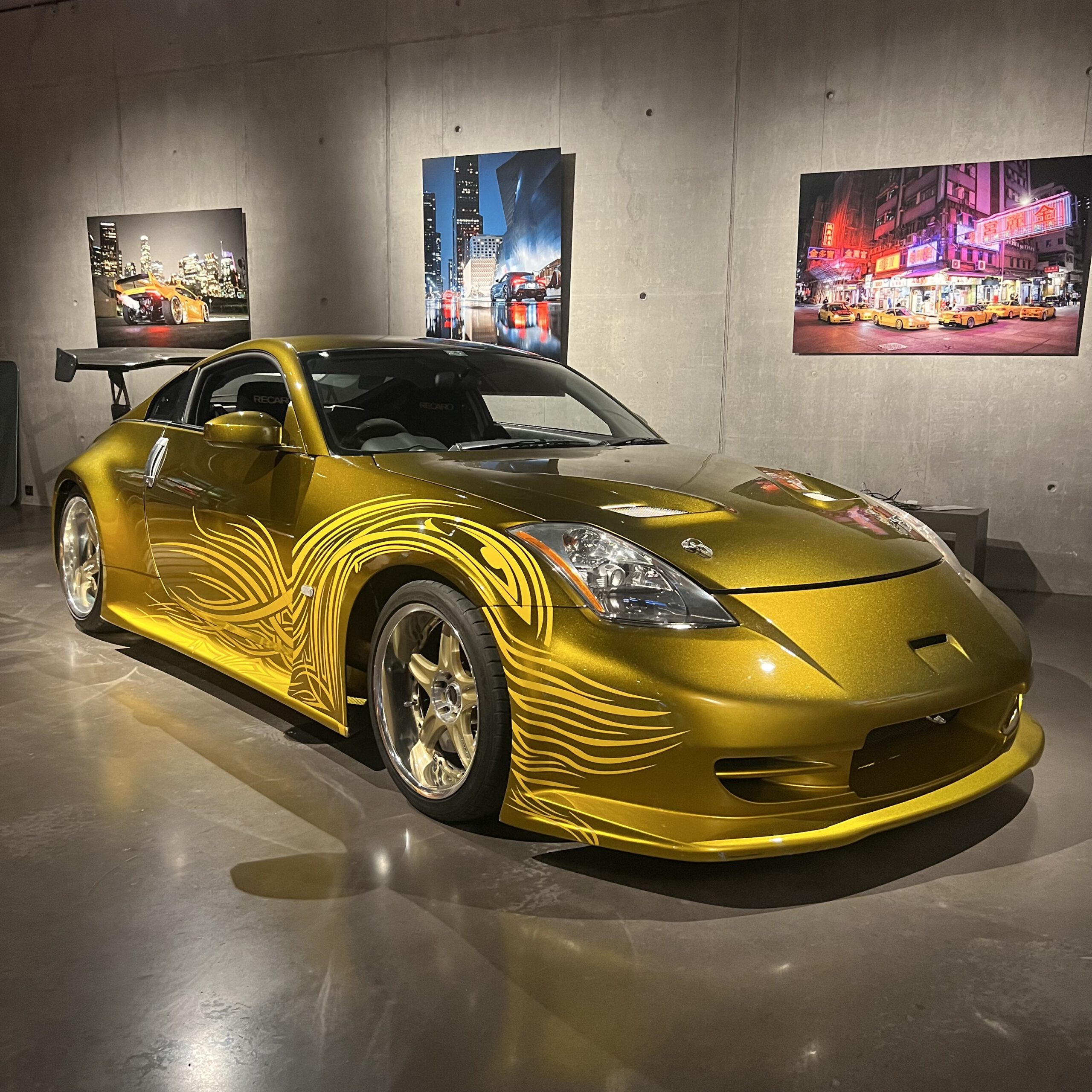
„Morimoto“ Nissan 350Z | „Tokyo Drift“
Fahrzeugdaten
Motor: 3,5 Liter V6 (VQ35DE)
Baujahr: 2003
Leistung: ca. 280-300 PS
Special: originales „Fast & Furious“-Movie Car
Teil 3: „Tokyo Drift“
Historie
Bei dem ausgestellten Fahrzeug handelt es sich um das sogenannte „Hero Car #1“, gefahren von Hollywood-Schauspieler Leonardo Nam alias „Marimoto“.
Das Fahrzeug ist in mehreren Schlüsselszenen als Teil von „DKs Crew“ zu sehen und durch seine Tribal-Lackierung besonders auffällig in den Parkhaus-Rennen.
====================
The vehicle on display here is the so-called „Hero Car #1,“ driven by Hollywood actor Leonardo Nam, aka „Marimoto.“
The vehicle appears in several key scenes as part of „DK’s Crew“ and, thanks to its tribal livery, is particularly eye-catching in the parking garage races.
Besonderheiten
Bekannt aus:
- The Fast and the Furious: Tokyo Drift (2006)
- Gefahren von Hollywood Schauspieler Leonardo Nam alias „Morimoto“, rechte Hand von Driftking Takashi alias „DK“
Optik / Besonderheiten:
- Bodykit: Top Secret Super G-Force und Top Secret Spoiler
- Lackierung: House of Kolor Gold/Schwarz mit goldenen/gelben Tribal-Grafiken
- Felgen: Rays Engineering Volk Racing GTC in Top Secret Gold (VA 18-Zoll / HA 19-Zoll)
- Tiefergelegt, sportlicher Breitbau-Look
- Deutlich auffälliger durch die goldene Kontrastfarbe im Vergleich zu DKs grauem Z
Performance (Filmfahrzeug):
- 3,5-Liter-V6 (VQ35DE)
- Ca. 280–300 PS (seriennah, Filmfahrzeuge meist optisch statt technisch getunt)
- Heckantrieb
- 6-Gang-Handschaltung
Film-Auftritt:
- Gesehen in mehreren Schlüsselszenen als Teil von DKs Crew
- Besonders auffällig in den Parkhaus-Rennen durch seine Tribal-Lackierung
- Symbolisiert Loyalität und das „muscle“ hinter DK
Besonderheiten:
- Etwas weniger Screentime als DKs 350Z, aber durch das Tribal-Design ikonisch für Fans
- Der „Morimoto“ 350Z ziert zudem die offiziellen Tokyo Drift Kinoplakate und die DVD-Box Cover
Bei dem hier ausgestellten Fahrzeug handelt es sich um das sogenannte „Hero Car #1“. In der Auto-Filmwelt bezeichnet der Begriff „Hero Car“ das Hauptfahrzeug, das im Mittelpunkt einer Produktion steht. Es ist in der Regel das bestausgestattete, detailreichste und optisch makelloseste Exemplar einer ganzen Flotte identischer
Fahrzeuge, die für die Dreharbeiten vorbereitet werden. Während sogenannte „Stunt Cars“ für Actionszenen wie Sprünge, Drifts oder Crashs verwendet werden, bleibt das Hero Car weitgehend unversehrt und wird vor allem für Nahaufnahmen, Dialogszenen mit den Hauptdarstellern oder Promotionauftritte eingesetzt. Es ist also das
„Aushängeschild“ des Fahrzeugs im Film – oft jenes Auto, das später Kultstatus erlangt.
====================
Known from:
- The Fast and the Furious: Tokyo Drift (2006)
- Driven by Hollywood actor Leonardo Nam, aka „Morimoto,“ right-hand man of drift king Takashi, aka „DK“
Looks / Special Features:
- Body kit: Top Secret Super G-Force and Top Secret spoiler
- Paint: House of Kolor Gold/Black with gold/yellow tribal graphics
- Rims: Rays Engineering Volk Racing GTC in Top Secret Gold (front 18-inch / rear 19-inch)
- Lowered, sporty widebody look
- Significantly more noticeable due to the gold contrast color compared to DK’s gray Z
Performance (movie car):
- 3.5-liter V6 (VQ35DE)
- Approx. 280–300 hp (close to production, movie cars are usually visually tuned rather than technically tuned)
- Rear-wheel drive
- 6-speed manual transmission
Film Appearance:
- Seen in several key scenes as part of DK’s crew
- Particularly noticeable in the parking garage races due to its tribal livery
- Symbolizes loyalty and the „muscle“ behind DK
Special Features:
- Slightly less screen time than DK’s 350Z, but iconic for fans due to its tribal design
- The „Morimoto“ 350Z also adorns the official Tokyo Drift movie posters and the DVD box cover
The vehicle on display here is the so-called „Hero Car #1.“ In the automotive film world, the term „hero car“ refers to the main vehicle that is the focus of a production. It is usually the best-equipped, most detailed, and visually flawless example of an entire fleet of identical vehicles being prepared for filming. While so-called „stunt cars“ are used for action scenes such as jumps, drifts, or crashes, the hero car remains largely intact and is used primarily for close-ups, dialogue scenes with the main actors, or promotional appearances. It is therefore the „poster car“ of the vehicle in the film—often the car that later achieves cult status.